Now Available: The Farthest Reaches

THE FARTHEST REACHES

SCIENCE FICTION

CLINT WESTGARD

A mission gone wrong in the vast depths of space. A strange artifact in a rancher’s pasture, that may or may not be of alien origin. A deadly contagion spreading like wildfire across the planet.

These and other stories explore the impossible choices faced by those who have lost everything and the fine line between faith and disbelief, reality and dream, silence and a scream. There are no simple answers in The Farthest Reaches.

A mindbending, universe expanding collection of science fiction stories that will take you to the edges of imagination.

Buy the ebook

Excerpt: The Farthest Reaches

In advance of the publication of  The Farthest Reaches on July 27, here is a short excerpt from one of the stories in the collection, Dream Logic :

She suspected, though she had no proof one way or the other, that this fallen realm in which her dream had her trapped was underground.. Perhaps it was the ever-present shadows and darkness, the days as the nights, whole and unchanging that led to this belief. Her existence here was immutable unmarked by any sense of the passage of time. She imagined a world of caverns, hollowed out and reconstructed into this strange habitat that seemed to her without purpose. A dream within a dream, she realized, and perhaps it was just the dream state thwarting her senses and not allowing her to comprehend all that she saw.

The last words of the voice came to her mind, dimly and half-remembered, as though that were the dream and not this. She was following one of her usual trails toward a dispenser that she was knew was still working. After that, if her dream went as it normally did, she would go above to one of the higher rings where there was a large room filled with desks with screens. Some of the screens still worked, after a fashion, and she would sit and watch them flashing their information and images, until she grew restless and started moving again.

This time, compelled by the words, she continued on along the ring, chewing on the block of foul tasting food the dispenser had given her. She often felt ill after she had eaten the food, though this dispenser seemed to agree with her more than the others. It was clearly degrading, as everything here was, and part of her knew that it was only a matter of time until all the dispensers failed entirely. Would her dreams allow that to happen, would her mind compel the machines to continue to work or would the logic of situation play out as it should? And what then?

Not wanting to dwell on that, disliking the sensation of dreaming and yet aware that she was in a dream, she pressed on, ducking through corridors. Rather than taking one of her usual paths, the ones she knew were safe and abandoned, she went to those areas that the Fallen inhabited. Not all of them were unhazardous, she knew, so she went with care, always checking each door she passed through to make sure it had not sealed behind her allowing her no escape.

One of the machines confronted her as she went, looming up out of the darkness, demanding her authorization. Its voice was disturbingly similar to the one that questioned her when she was awake, though they all sounded more or less the same. The flat monotone, parched of emotion.

“The area is contaminated. Please exit immediately. You are not authorized.”

She ignored it, ducking around its bulky frame and moving down the black corridor, the machine sounding an alarm that no longer functioned. The corridor ended at a door that was jammed, which she pushed and pried apart just enough so that she could slip through. She waited a moment to ensure it did not close on her and then turned to go further down the corridor, her path illuminated by a blinking red light along the ceiling. Was this the alarm the machine had started after her breach into his realm, she wondered, or was it from some earlier calamity?

There were a few doors off the corridor, but she knew by the shape and the markings on them that there would be nothing of interest in them. They were small rooms that had perhaps been used for storage or for those who had left to sit in and pass their days. Now they would be empty, or filled with the uninteresting refuse of the decay. At last she found what she had been looking for, a larger door than the others with symbols above its frames. It was open, its automation having failed, and she stepped through into a large chamber.

It was cavernous, the ceiling stretching up past the far reaches of her sight. There were giant tubes, fragile seeming cylinders, and pipes that curved and wound around on themselves, sheltered behind protective glass. Some glowed with dim activity while others were dark. The flashing red light was brighter here, more insistent, if that were possible. She ignored all of that, ducking around the artifacts of this previous age, looking for one of the Fallen. They would be here, she knew, the smell of them was undeniable.

After some searching she managed to find one. He leaned against one of the glowing cylinders, seeming to rest his head against it as he stared off into the distance. In spite of his faraway gaze she felt his eyes upon her, no matter where she stood as she considered her approach. At last, realizing that he would already have seen her anyway, she walked up to him directly. The heat coming from the cylinder on which he rested was tremendous. Instinctively, she crouched down as she moved forward, as though that would protect her from whatever force lay within the tube should it somehow be loosed.

Nothing happened as she came face to face with the Fallen man. The cylinder did not explode, as she had feared, nor did the man rise up and seize her. He continued to stare off into the distance, a leering grin marking his face. She eyed him warily, still unconvinced that this was not some manner of trap that he had lain for her. When he made no motion at all, after she had watched him for several minutes, she moved within range of his grasp, poised to flee at the first instant of motion.

None came and then she wondered if he were waiting for her to speak, to make plain her intentions. How did one address the Fallen? She had no idea, the machines mostly did not respond to her, perhaps it would be the same here. In this realm it seemed she had forgotten the tools of speech, though words still seemed to form as thoughts in her mind. She wet her lips and reached out to touch the man, thinking that if there were no words to speak, then this gesture might be enough.

Her hand had just brushed the cloth of his uniform when one of the machines seized her.

“You are not authorized. The area is contaminated.”

The Farthest Reaches is now available for preorder:
Buy the ebook

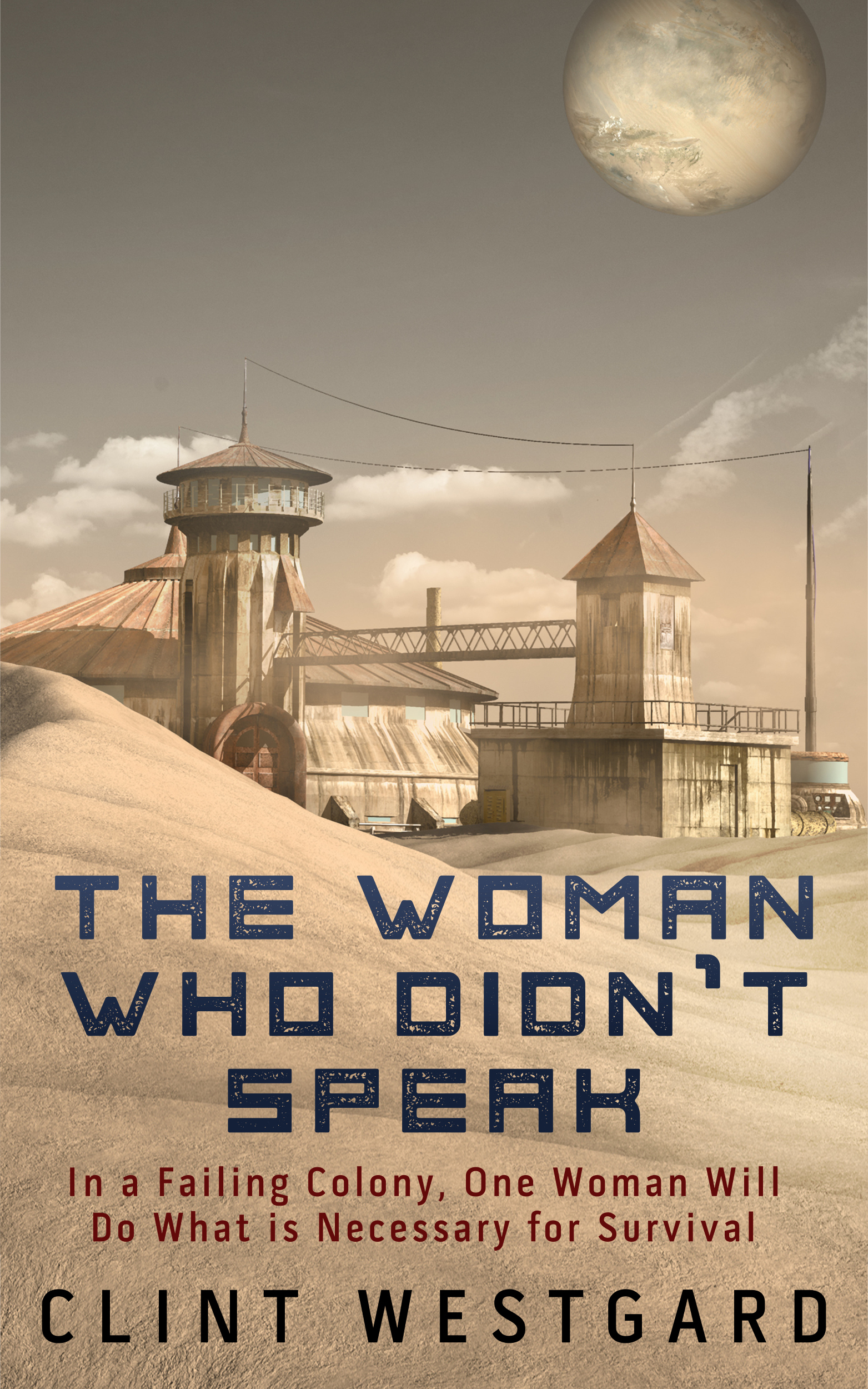
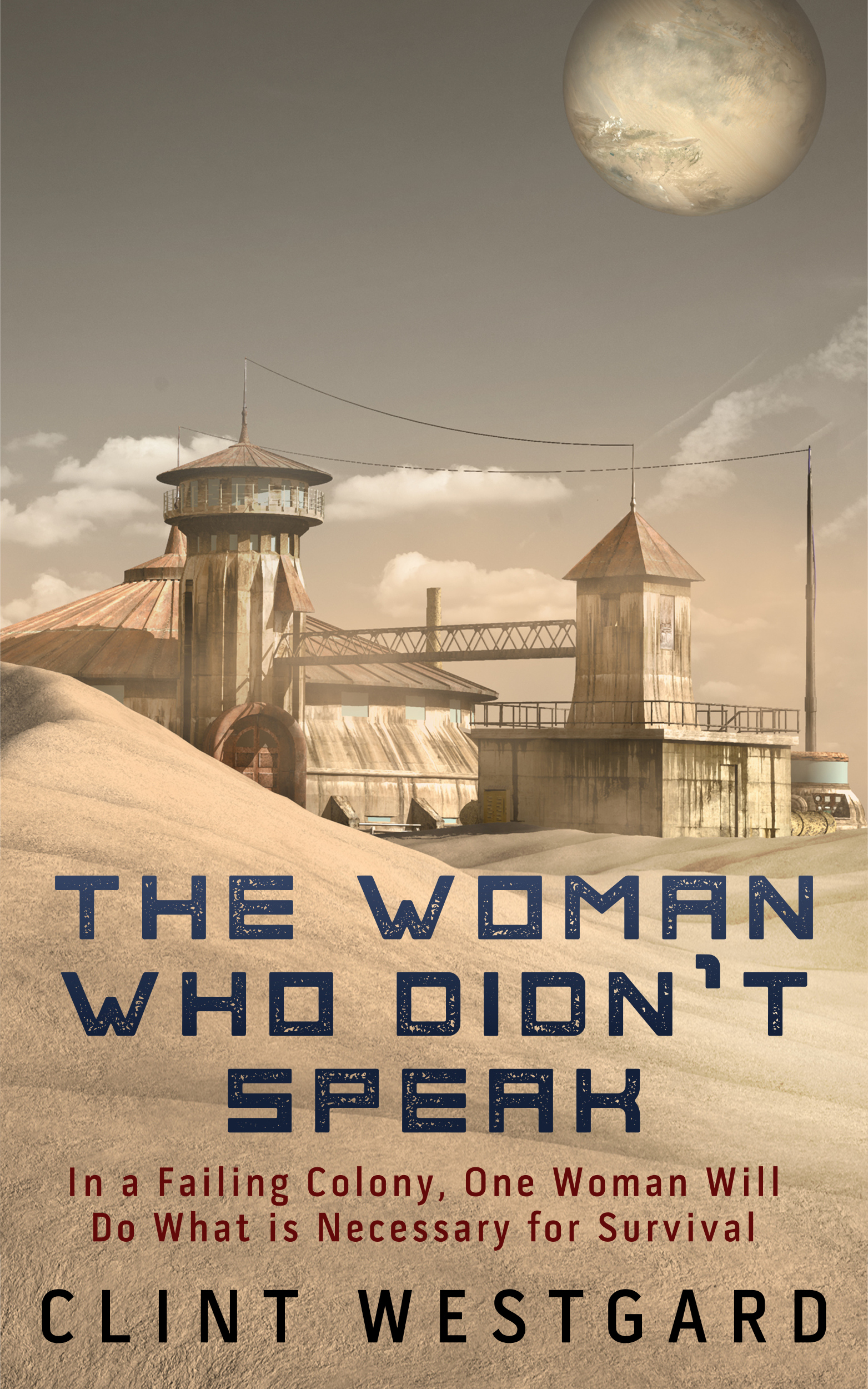
Now Available: The Woman Who Didn’t Speak

THE WOMAN WHO DIDN’T SPEAK

SCIENCE FICTION

CLINT WESTGARD

In a failing colony, one woman will do whatever it takes to survive.

Soon after their arrival on the planet, everything starts to go wrong. Crops fail. Strange fevers afflict the colonists. Terrible storms rack the settlements. All the while their supplies slowly dwindle.

In the face of such calamity many retreat into despair, refusing to leave their homes. Others embrace an optimism, oblivious of all facts. Marjiana chooses a different path.

A story that asks what you would do when there is no hope to be found in the farthest reaches of space.

Buy the ebook

Excerpt: The Woman Who Didn’t Speak

In advance of the publication of The Woman Who Didn’t Speak on June 29, here is a short excerpt:

1

There was no light in the sky when Marjiana rose from bed. The red sun—which she had yet to grow used to in the fifteen years she had lived on this planet—remained hidden from sight behind the horizon. It did not feel like home this place. Not even after all this time living here, not to mention the extended journey to arrive at this destination. It was still a place she had come to, not a place she was from.

And also the place she would be spending her remaining days, however many they might be. For there was no leaving here, no matter how much they all might wish to.

That was a thought best not dwelt upon, especially not first thing in the morning, lest it cast a shadow over the rest of the day. There were shadows enough in this place without bringing more into this world. Life was hard enough as it was.

She did not turn on any lights in the house, preferring to move about by feel, and wanting to preserve their reserves of electricity for necessities and emergencies. A splash of cool water on her face after brushing her teeth was the only luxury she allowed herself. That and the coffee she set to boil atop a gas burner . It was not real coffee, but she had mostly forgotten the taste of the real thing. This was near enough, and even the supplies of it were dwindling.

Day by day all their supplies were dwindling. And what would remain when they were gone?

Another thought best put aside. There was a long day’s work ahead and Marjiana did not need to join those who had succumbed to the settler’s melancholy, remaining in their homes, leaving their fields to ruin, waiting for starvation or the elements to release them from their suffering. Not that it wasn’t tempting. But she had four mouths to feed—five if one counted Kjessel, and she supposed she had to. He was her husband, after all.

When the coffee was ready she drank it, savoring each drop, closing her eyes to listen to the stillness around her. Neither Kjessel nor any of her sons were awake, and none of them would be until after the sun rose. None of the neighbors were up and out in the fields either. The quiet—so strange, at first, after a lifetime spent on a planet with birds and insects, or on the vessel that had brought them here, where there had been a constant hum and hiss of systems at work—was now something she treasured above all else.

It was the one thing she would take from this failed world, if she could. Given there was no leaving here, it was her only solace.

She could hear someone stirring in one of the other rooms and, taking that as her signal, she rose from the kitchen table and went out to the fields to begin her day’s work.

2

Garuhj, the hetman, welcomed them all to the main square of the settlement, embracing many of the women and clenching the hands of the men, beaming from ear to ear. He had been elected hetman in the fifth year of the settlement, the first time the crops failed. They had failed twice more since then, to say nothing of the rhesus fevers, which had killed more than half of those in the settlement. Yet his beaming countenance remained unchanged.

Even now, as the crops began to show the first signs of the strange rot that no one could determine the cause of, Garuhj maintained his outward optimism. Marjiana suspected his own thoughts were not so positive, but the hetman was a politician above all, and versed in projecting confidence. She considered him a thing to be suffered, no different than the rot and the fevers, another of the burdens of this place to be endured.

Welcome Marjiana. Danjiel. Codij. Jeriem. I hope you are all well. Kjessel is not joining the celebration?”

Marjiana shook her head.

He’s not well,” Danjiel said, a little too quickly.

The hetman did not notice, his gaze already going beyond them to the next family of settlers he was to greet. In the celebration that followed, Garuhj gave his usual speech, marked by his typical platitudes and his claim that hope was necessary, in spite of all that had gone wrong.

When we set down on this day, thirteen years ago, it was to an uninhabitable rock. We knew there would be trials and tribulations, and no doubt there have been. Not all of us have survived them, and we would be remiss if we did not remember them. But we need to honor their memory and sacrifice by recognizing what we have achieved, which is so much.

Where once there was a barren windswept landscape, now there is soil, there is air and there is water. All the necessities we require to survive. Instead of looking at all those places where we have struggled and failed, we should look at what we have achieved, and recognize that we have it in us to survive here.”

Garuhj’s eyes flashed with emotion as he spoke. He truly believed. But the celebrations that followed were tepid, everyone only too aware of the failures of the colony. For they were in evidence all around them. The cloudless sky that promised no rain yet again. The thin soil they trod upon, from which little could grow, and which seemed to contain the germ of the rot that ate at what did.

Even the food at the celebration was a sign of failure, for it was taken from the ever-dwindling supplies the vessel that had brought them here had carried. Intended to tide them over during the first lean years after the terraforming was complete, they had been unused initially during those bountiful years, only to become absolutely necessary now.

As Marjiana and the boys prepared to take their leave of the celebration and begin the walk back to their home, about a kilometer from the central square of the settlement, Garuhj intercepted them, barely hiding his concern.

Leaving so soon?” he said. When no one replied, he added, “What’s this I hear about you not speaking anymore?”

Marjiana did not reply, shrugging and motioning her one hand slightly in dismissal in reply. The hetman blinked, unsure how to respond.

She started a month ago,” Danjiel said, flushing red under the hetman’s gaze.

What other symptoms does she have? Has the doctor seen her?”

Oh, she has no symptoms. She just chooses not to speak,” Danjeel said as Marjiana nodded.

Garuhj seemed unsure of himself. “I will ask the Fenon to come by.”

Marjiana frowned and shook her head, with a finality anyone might have understood.

Of course, I understand, but what about your sons?” the hetman stammered.

It’s no problem,” Jeriem, her youngest, said. “We understand her fine.”

Garuhj looked as though he wanted to say more, to argue that Jeriem could not possibly be telling the truth, but a look from Marjiana stopped him short. She led her sons back home, aware as she left the celebration that a number of those present had been watching her conversation with the hetman very closely.

The Woman Who Didn’t Speak is now available for preorder:
Buy the ebook

Excerpt: The Purpose of the System

In advance of the publication of The Purpose of the System on May 25, here is a short excerpt:

DISPATCH ONE

The air hisses, like a sigh expiring, as the airlocks link. Hidden gears turn, interlocking, the vessel and the habitat system speaking to each other, and at last the alarm sounds, notifying us that the doors are opening. The alarm continues to pulse, the light above the joined airlocks blinking red in unison with it. I adjust my metabolism, speeding it up from slow time, trying to time it so I reach my normal rates as the door opens and I have to move forward. I need to conserve my energy. There is no telling when I will be able to replenish myself.

Objective: CNS. Habitat A1.

A map of the habitat materializes in my mind as the thought is given voice. I see our path through the habitat to where the CNS is situated. Our target. The going will be easy until the first junction with the outer ring. After that, we will need some luck. Luck, the System’s Trojans and malware, and the System itself to guide us.

Only six of us exit the vessel, not the planned twenty-five. Those left behind did not emerge from the depths of stasis when the System alerted us to our imminent arrival. No information had been offered as to their status and I did not bother to query. They are no longer relevant to the objective.

I can hear the others whisper their invocations to the System, as we pass through the air lock, and I join them. “System guide us. System protect us. We will heed your call.”

The air in the habitat smells sweet, with hints of the sea, vegetation and earth, none of which exist here. The scent has been manufactured, I assume, for those that maintain the habitat. It seems an outrageous luxury in a place where strict functionality is the rule. The habitat’s purpose is to house the CNS, which runs the entire fleet. The Intelligence. There should be nothing extraneous, and yet the smell said otherwise.

We had infected the habitat. The System had, at least. Or other agents in its service. It was not important; we were all the System, all cells in its larger body, subjugated to the larger cause. We had infected this Intelligence, allowing our vessel to dock with the habitat and allowing us entry without being incinerated by the various firewalls. Now we had to evade its secondary security protocols, no mean feat for the six of us remaining.

I feel no fear, in fact, I feel nothing. My emotional dampeners are functioning. Logically, I know, we are all very likely to die. Our individual odds of survival are miniscule, our chances of success only slightly greater. But I am ready. We are all ready for what is to come.

DISPATCH TWO

I dreamed, I was certain of it, though such a thing was not possible in stasis. The images were fleeting, flickers in my data stream, enough so that I could almost tell myself they were messages from the System. But they were not. They were my own thoughts.

The unending streams of data—the intel and subvocalizations of my fellow chosen, my internal health sensors, and above all the System’s voice, with its constant intel updates and objectives—lulled me in my stasis, a comfort. That was what made the dream so disconcerting. It interrupted the streams, drowned them out, leaving me, in a sense, alone with my thoughts. It was utterly terrifying, or would have been, if I had not been in stasis, with my emotional dampeners active.

I saw myself standing before the Intelligence, blood pooling at my feet. I felt a touch of pain that was rapidly dimmed, my body responding with adrenaline and other dampeners. There was a taste of tin in my mouth. Blood as well, I realized. In my hands was my still-beating heart. I held it up to the Intelligence as though in offering.

The Purpose of the System is now available for preorder:
Buy the ebook

system-corrected

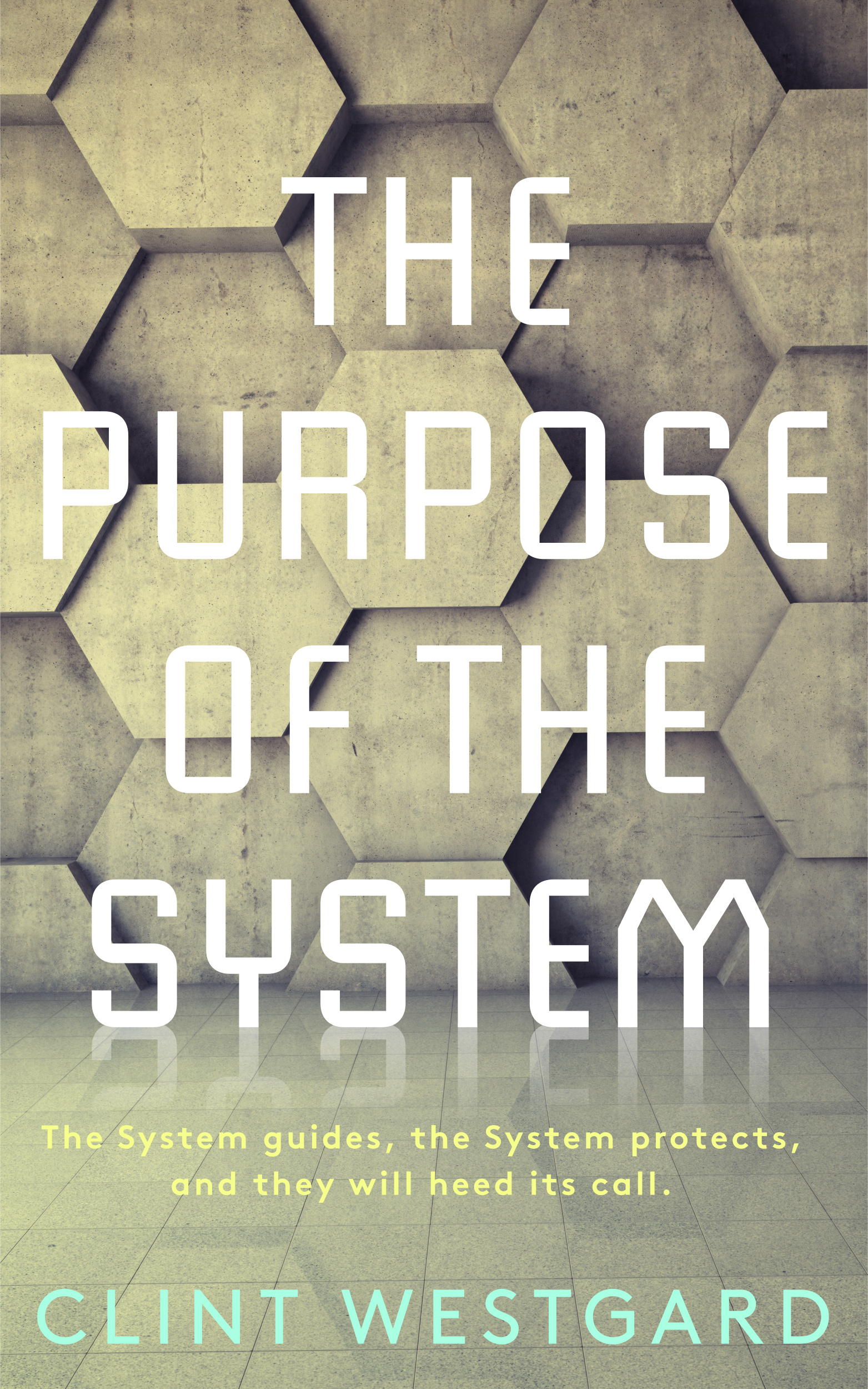
Now Available: The Purpose of the System

THE PURPOSE OF THE SYSTEM

SCIENCE FICTION

CLINT WESTGARD

The System guides, the System protects, and they will heed its call.

The habitat appears defenseless, but is it? There are strange gaps in their communication, strange odors that no one can place. The System has given them their orders and has an explanation for everything.

But that explanation is called into question when members of their team start to getting killed. Those remaining have to ask themselves the unthinkable: is the System out to get them?

A science fiction story about a mission gone wrong in the vast depths of space.

Buy the ebook

system-corrected


Now Available: The Apostate

THE APOSTATE

SCIENCE FICTION

CLINT WESTGARD

With her self restored but not her body, Laila has only one goal in mind. To have her revenge upon the Grand Regent for all he has done to her. First, though, she needs to find her way home across the universes.

That is easier said than done. The Grand Regent’s agents in the Watchers’ Order are still pursuing her. As is the Society of Travelers. And the Seeker lurks somewhere, waiting for his moment to strike.

Laila has a plan, though, and a few tricks of her own. But she will soon discover that not everything is at seems and there is no one she can trust.

Spanning multiple universes and the complexities of the human mind, The Apostate, continues the incredible journey begun in The Forgotten. The second volume of The Sojourners Cycle is an unforgettable science fiction epic that encompasses the fates of universes and humanity itself.

Buy the ebook

the-apostate

Excerpt: The Apostate

In advance of the publication of The Apostate on April 27, here is a short excerpt:

The address, I saw when I arrived, was for a strip mall set off a busy street. There was laundromat, a barbershop, a pizza place, and a Chinese food place advertising its homemade jerky. There was another shop on the far corner with a faded sign and awning where it was not immediately obvious what was on offer within. A front of some sort, I thought. There was a payphone on the street corner—no phone box, just a pole bent at an odd angle with a phone attached—and a wide-eyed man was carrying on a loud and scattered conversation. “I just need twenty bucks man. That’s all,” I heard him say, and felt a familiar itch begin to work inside me.

I turned away, before it had a chance to grow more insistent, and went to find the entrance to the offices above the shops. It was around the side from the mystery store, and I went up the stairs, noting the well-worn carpet. At the top of the stairs there was a directory, which I scanned until I found what I was looking for: 214 Regency Services Limited. I followed the arrows down one of the hallways past closed doors to offices, disconcerted by the silence emanating from the hall. Was there anyone in any of these? I began to feel quite certain that this whole enterprise was a mistake, a waste of a precious free afternoon that I could have spent doing something else. I thought again of the man on the phone below and the itch returned. That was enough to push me on toward the office.

I knocked on the door and several painful seconds passed without any indication that there was someone within, during which I told myself again and again that I should turn and go. The door opened, revealing a young man about my age with a welcoming smile and shaggy mop of hair. “Welcome, Laila,” he said. “I’m so glad you decided to come.”

I could only muster a nervous smile in return as he ushered me inside. He continued to chatter away, trying to set me at ease, but I did not listen to what he was saying, my doubts about coming here returning sharply again. This was a mistake. My roommate had been correct. It was a cult and I was just one of the susceptible fools being drawn in. I was led into a large conference room overlooking the parking lot below, and the congenial Regent, as they referred to themselves, told me to make myself comfortable and that he would return in a moment.

There were three chairs in the room, looking oddly out of place in the rest of that empty space. I sat in the one facing the other two, understanding what was expected of me. A few minutes passed and I tried not to fidget or think about the man on the phone below or why I was here at all. Just as I was preparing to stand up and leave, the door opened and the man who had welcomed me entered, still smiling, followed by an equally gregarious woman. Both of them were dressed in bland white and black clothing, as though they were administrators in some office. I half expected them to launch into a discussion on supply chain or risk management.

The woman gave me a generous smile. She had long, tightly coiled hair that she had pulled back behind her head, and it danced behind her as she spoke. “My name is Opal, and this is Hector. Thank you so much for coming today. We have so much to tell you about our faith. But first, what brought you to us?”

I squirmed in discomfort under their gleaming eyes. “I read some of Mayan Codexes and The True Nature of the Multiverse.”

It is De Gofroy’s finest work, in my opinion,” Hector said with an encouraging nod.

It was interesting. I…I guess I wanted to find out more.” The room seemed uncomfortably warm, though the windows were tinted to stop too much light from coming in.

Of course,” Opal said. “We are happy to answer any questions you might have. First we’d like to find out a little more about you. You know how we do that?”

The Protocol, yes,” I said.

What we will do today is not the Protocols,” Opal said. “That only takes place at our Protocol Centers. For our initial meeting, we do what is called a pre-script.”

Oh,” I said, and cleared my throat.

It’s something De Gofroy developed,” Hector said. “The Protocols are too difficult for most new initiates to go through. It’s overwhelming. The pre-script helps to open your mind to the Protocols. Helps prepare for the changes you will undergo. I will not lie to you—the Protocols of the faith are difficult. Not everyone is able to endure them. The pre-script will tell you if you have what is required.”

I thought this was all supposed to help me,” I said. My throat felt dry, and I wanted to ask for a glass of water.

Oh, it does,” Opal said with the certainty of a true believer. “I cannot begin to tell you how. You’ll have to experience it yourself.”

Hector nodded firmly. “I was lost, completely adrift with my life. The understanding that I have gained from De Gofroy’s teachings and the Protocols has completely reshaped me. I understand my place in the universes now and I know what must be done and the part I will play. You will be a magnificent vessel.”

I looked from face to face, their eyes shining with belief, in a way that made me feel uncomfortable. I wanted that certainty. I wanted the vague sense of emptiness and unease that had haunted me for so long to dissipate. Yet everyone said the Regents were mad, a cult, with no greater understanding of the universe than any other religion. All of it lies. There was something about De Gofroy’s book that had struck a chord in me, though, about our infinite selves. I felt that, and I wanted to understand more.

Shall we begin?” Opal said.

I nodded.

The Apostate is now available for preorder:
Buy the ebook

In A Flash: In Time

The woman had close-cropped, dark hair in an unfamiliar style. But Dez rarely recognized styles, be they clothing, hair or make-up anymore. It was the marker of all the time that passed while he was in-ship. That was its own time, both faster and slower than the time for those outside it. He lived his days normally, as any other, and on these worlds decades, sometimes even centuries passed.

So much changed that he often experienced a sense of vertigo when he emerged to see what there was of the universe. What did not change, what was constant as the stars themselves, was the urge. It was quiet in-ship, biding its time, knowing that its moment would come. But once he stepped onto these teeming planets, ripe with possibility, it could not be denied.

The woman did not notice him slipping into the flow of the crowd to follow her down the street. This city had streets, open to the elements, as Dez’s own home had. He could remember so little specific about it now. Somehow in-ship had become his default environment, what he associated normal with. Off it, the assault of color and noise, the press of people, the endless space extending on through vast constructions, was all foreign and other.

Most of those who went in-ship did so on one way voyages. They had their reasons. Others, a select few, such as Dez, lived in-ship, going from port to port, letting the centuries drift past. They would grow old in-ship and die there, a thousand years or more after their birth. It was a kind of immortality, though a meager .

And a sequestered one, for most could not stomach more than brief visits while in port to the worlds and what they held. Some drink and some companionship, though even those basic needs could become complicated by several centuries of cultural detritus, were all they were looking for. Most of his shipmates avoided it, staying aboard and interacting only with those on the docks, where they were treated as a kind of bizarre nobility. Dez always availed himself of the opportunities to stretch his legs and see what there was to be seen. As claustrophobic and nauseous as it was, there were things he had to see to.

Read the rest at Circumambient Scenery.

In A Flash: read a new story every Thursday…

If you like this story, or any of my others, please consider supporting me on Patreon

Image Credit

In A Flash: The Inspectors

The gas giant hid secrets, long buried, or so they hoped. Tlan Garsh and Yzal Bey, the lead inspectors for the Exalted Gerent, who ruled this miserable portion of the galaxy, had come looking for the one who had betrayed him. They had followed a trail, intermittent and well-disguised, and the evidence had brought them here to this abandoned system, with only this massive gas giant left unharvested for resources by the Gerent’s Marauders.

For months and months, as the Marauders laid waste to the feeble forces of Sborz system, intending to enslave the population and extract what was usable from its planets and habitats, there had been problems. These had been tiny and insignificant, hardly worth reporting to the Exalted Gerent—though a failure to do so would, if discovered, result in a horrible and inventive punishment. The delays to the Marauders ultimate conquest of the system were minimal, but, all the same, however inconsequential the issue, it had to be resolved.

The Exalted Gerent did not countenance betrayal of any sort, and there could be no doubt that this was a betrayal of his mandate. Tlan and Yzal had established that to everyone’s satisfaction. Someone within the ranks of the Marauders, or worse—and this did not really bear thinking about, for the consequences would be dire for anyone even tangentially involved—within the Gerent’s inner circle. This was why Tlan and Yzal had been directed, by the Exalted Gerent himself, to find whoever it was who was daring to defy him and see justice done.

Their ship informed them that the system was empty as they passed out of the portal, the only remnant of the worlds that had once existed here. This was to be expected and neither one paid it any mind. Tlan directed the vessel toward the gas giant, the coordinates of which had been broadcast from ships within the Marauder fleet on each occasion when the double agent had sent information to their enemies. The coordinates, they had discovered, contained information packets, cleverly concealed, that revealed the position of the Marauder fleet, it’s planned movements, and its numbers, among other things.

The ship ran any number of scans of the gas giant and sent in a few probes. All revealed the same thing: this was gas giant, like any other gas giant. There was nothing remarkable about it.

Tlan looked at Yzal with a wordless question: What now?

Read the rest at Circumambient Scenery.

In A Flash: read a new story every Thursday…

If you like this story, or any of my others, please consider supporting me on Patreon

Image Credit